Learning from staff claims relating to exposure of substances hazardous to health
Advise / Resolve / Learn
Introduction
In healthcare environments, staff members can become exposed to substances hazardous to health as part of their day-to-day work that can lead to adverse outcomes to health. By sharing our claims data as a catalyst for learning, we aim to encourage improvements in reducing harm and improving staff safety. This resource outlines risks associated with these exposures, and illustrates learning from claims through illustrative case stories and an analysis of recurring themes in settled claims.
NHS Resolution received 371 claims for harm caused by exposure to substances hazardous to health from incidents occurring between 1 April 2013 and 31 March 2023. The total cost for closed claims was £5,989,451. Of these 371 claims, there were 165 that were settled with damages paid. The total cost of damages paid was £2,471,880, excluding defence and claimant costs. 58 of the 371 claims are still open, they have been excluded from this analysis. These claims could go on to settle with or without damages1.
Did you know? Managing hazardous substances in the workplace
The Control of Substances Hazardous to Health Regulations (COSHH) Regulations 2002 (as amended) requires employers to:
Assess the risks that arise from the use of hazardous substances. This includes arrangements to deal with accidents, incidents or emergencies, such as those resulting from serious spillages. The assessment must also include health and safety risks arising from storage, handling or disposal of any of the substances.
Prevent or, if this is not reasonably practicable, control exposure to such substances.
Provide staff with information, instruction and training about the risks, steps and precautions the employer has taken to control these risks, e.g. provision of appropriate personal protective equipment (PPE). See the hierarchy of hazard control.
Hazardous substances can be present in many parts of the healthcare environment and can include dusts, gases or fumes that are inhaled. They can also be present in liquids, gels or powders containing chemicals that come into contact with the eyes or skin, or harmful micro-organisms that can cause infection, an allergic reaction or are toxic.
The effect can be immediate, such as dizziness, chemical burns and stinging eyes, or can take many years to develop, such as lung disease and dermatitis. Many of the long-term or chronic effects are incurable.
Ill health caused by these substances used at work is preventable and, if they are used properly, they almost never cause harm.
Scope of analysis
The substances listed below have been excluded from this data set:
Asbestos (excluded as it is not covered by COSHH regulations 2002).
Radioactive substances e.g. ionizing substances (excluded due to separate regulations).
Some biological agents e.g. Covid-19 and influenza (excluded due to data reporting period still open).
Lead (excluded due to separate regulations).
Pathogens e.g. salmonella, nickel, contaminated water, legionella, pseudomonas (excluded due to low claim numbers).
Needlestick injuries are covered by COSHH, but they are also covered by the Medical Sharps Regulations and are therefore excluded from this analysis. Further information can be found in Did you know? Preventing needlestick injuries.
Substances hazardous to health
Staff are eligible for compensation when certain criteria are met, the claimant needs to establish a breach of duty of care, injury/harm and causation (that the two factors are linked)2. For more information visit Liabilities to third parties scheme.
Figure 1: Chemical breakdown of substances hazardous to health
wdt_ID
wdt_created_by
wdt_created_at
wdt_last_edited_by
wdt_last_edited_at
Occupations
% Cleaning chemicals
% Dust and fumes
% Other chemicals
% Vehicle fumes
% Biological agent
% Preservatives, gases and vapour
% Hand hygiene products
1
ChloeKellyOmera
02/10/2024 01:39 PM
ChloeKellyOmera
02/10/2024 01:39 PM
Occupation not reported
8
7
18
11
25
2
ChloeKellyOmera
02/10/2024 01:39 PM
ChloeKellyOmera
02/10/2024 01:39 PM
Ambulance staff (EMT’s ECA’s, paramedics etc.)
2
12.50
13
82
3
ChloeKellyOmera
02/10/2024 01:39 PM
ChloeKellyOmera
02/10/2024 01:39 PM
Nursing (NMC registrant)
7
25.00
20
67
25
67
4
ChloeKellyOmera
02/10/2024 01:39 PM
ChloeKellyOmera
02/10/2024 01:39 PM
Health care support staff (i.e nursing assistant, plaster technician etc)
16
37.50
40
11
50
33
5
ChloeKellyOmera
02/10/2024 01:39 PM
ChloeKellyOmera
02/10/2024 01:39 PM
Facilities staff (i.e. cleaning)
67
25.00
20
11
Occupations
% Cleaning chemicals
% Dust and fumes
% Other chemicals
% Vehicle fumes
% Biological agent
% Preservatives, gases and vapour
% Hand hygiene products
The range of claims shown in Figure 1 displays all claims settled with damages paid by substances hazardous to health. Chemicals represents a significant proportion of claims, this is broken into two categories of cleaning chemicals and other chemicals3. A breakdown of cleaning chemicals is shown below.
Dust and fumes and cleaning chemicals were the highest occurring hazards4. This can be expected due to the frequency of cleaning required across NHS organisation estates (corridors, small windowless rooms, external and internal building repairs, and clinical areas).
Figure 2: Breakdown of all chemicals
wdt_ID
wdt_created_by
wdt_created_at
wdt_last_edited_by
wdt_last_edited_at
Chemical
Percentage
1
ChloeKellyOmera
30/10/2024 12:18 PM
ChloeKellyOmera
30/10/2024 12:18 PM
Chlorine-based product
4
2
ChloeKellyOmera
30/10/2024 12:18 PM
ChloeKellyOmera
30/10/2024 12:18 PM
Disinfectant
7
3
ChloeKellyOmera
30/10/2024 12:18 PM
ChloeKellyOmera
30/10/2024 12:18 PM
Cleaning chemicals
23
4
ChloeKellyOmera
30/10/2024 12:18 PM
ChloeKellyOmera
30/10/2024 12:18 PM
Dilution of cleaning chemicals
27
5
ChloeKellyOmera
30/10/2024 12:18 PM
ChloeKellyOmera
30/10/2024 12:18 PM
Chlorine-based and dilution
39
Chemical
Percentage
Themes
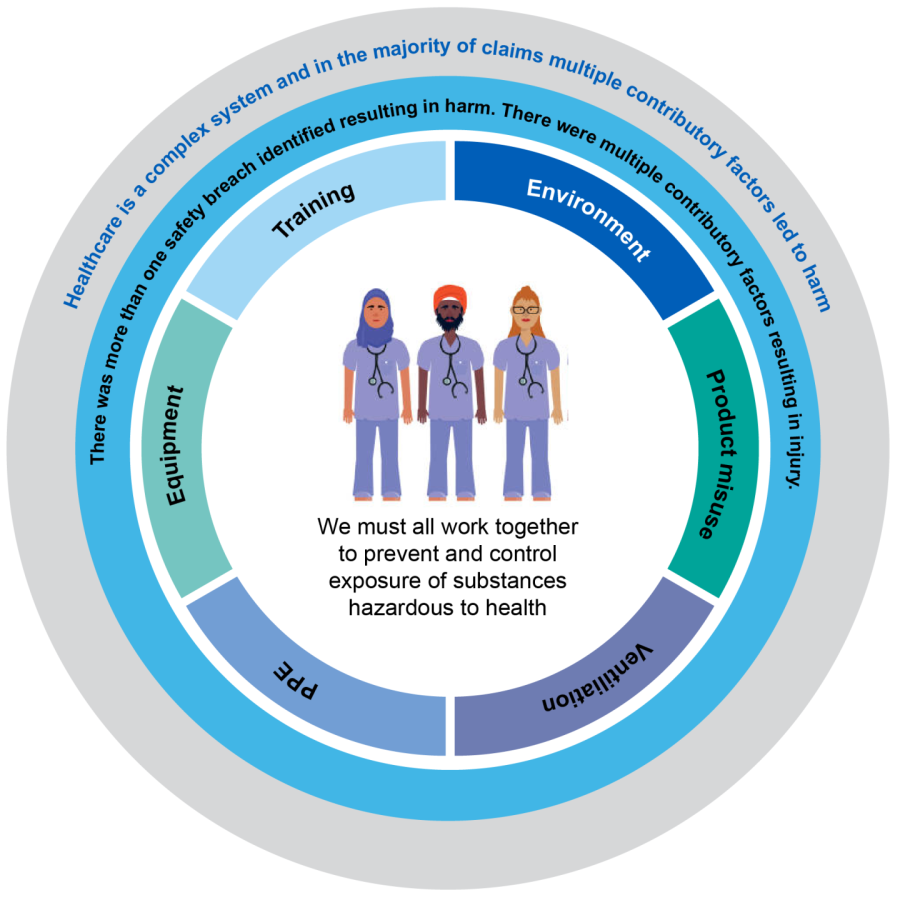
In the majority of claims multiple contributory factors led to harm. Within this multiple claim category often there was more than one safety breach which resulted in harm. These include organisational failure to prevent exposure, failure to risk assess, failure to monitor exposure, and failure to provide adequate PPE and training.
Within PPE it was found that inadequate PPE was provided, or the PPE was ill-fitting. Commonly, within ventilation, harm was caused by mixing chemicals in an inappropriate and poorly ventilated setting.
Staff by job role most impacted by substances hazardous to health
Due to the diversity of job titles used by the NHS to describe similar vocations, we have categorised the data into 14 general staff occupations, outlined in the table below. These illustrate a mixture of staff registered with a professional body and staff working in a supportive role. From the 165 claims settled with damages the frequency of claim is spread across 11 of these occupations. Those undertaking cleaning roles or clinical support work were among the highest claimants.
Figure 3: Total number of successful claims by occupation
Figure 3 – Total number of successful claims by occupation
wdt_ID
wdt_created_by
wdt_created_at
wdt_last_edited_by
wdt_last_edited_at
Occupation
Value
1
ChloeKellyOmera
06/01/2025 01:31 PM
ChloeKellyOmera
06/01/2025 01:31 PM
Facilities staff (e.g. cleaning)
28
2
ChloeKellyOmera
06/01/2025 01:31 PM
ChloeKellyOmera
06/01/2025 01:31 PM
Health care support staff (e.g. nursing assistant, plaster technician)
16
3
ChloeKellyOmera
06/01/2025 01:31 PM
ChloeKellyOmera
06/01/2025 01:31 PM
Nursing (NMC registrant)
13
4
ChloeKellyOmera
06/01/2025 01:31 PM
ChloeKellyOmera
06/01/2025 01:31 PM
Ambulance staff (EMT’s, ECA’s, paramedics)
8
5
ChloeKellyOmera
06/01/2025 01:31 PM
ChloeKellyOmera
06/01/2025 01:31 PM
Administrative staff
5
6
ChloeKellyOmera
06/01/2025 01:31 PM
ChloeKellyOmera
06/01/2025 01:31 PM
Estates staff (e.g. gardening, engineers)
5
7
ChloeKellyOmera
06/01/2025 01:31 PM
ChloeKellyOmera
06/01/2025 01:31 PM
Cathering staff
4
8
ChloeKellyOmera
06/01/2025 01:31 PM
ChloeKellyOmera
06/01/2025 01:31 PM
Portering staff
3
9
ChloeKellyOmera
06/01/2025 01:31 PM
ChloeKellyOmera
06/01/2025 01:31 PM
Other AHP (e.g. HCPC registrants excluding paramedics)
4
10
ChloeKellyOmera
06/01/2025 01:31 PM
ChloeKellyOmera
06/01/2025 01:31 PM
Laboratory staff
3
Occupation
Value
Substances hazardous to health pose a risk and can cause injuries to all healthcare staff. Various categories of substances impact specific vocations differently. In our cohort of claims the most frequently affected staff were facilities staff (28%), followed by healthcare support staff (16%), nursing (13%) and ambulance staff (8%). The chemical groupings are shown in Figure 4 below.
Figure 4: Claims related to substances hazardous to health
wdt_ID
wdt_created_by
wdt_created_at
wdt_last_edited_by
wdt_last_edited_at
Types
Cleaning chemicals
Dust and fumes
Other chemicals
Vehicle fumes
Biological agent
Preservatives, gases, vapours
Hand hygiene products
1
ChloeKellyOmera
30/10/2024 04:15 PM
ChloeKellyOmera
30/10/2024 04:15 PM
Biological agent
12
2
ChloeKellyOmera
30/10/2024 04:15 PM
ChloeKellyOmera
30/10/2024 04:15 PM
Chemicals
70
25
3
ChloeKellyOmera
30/10/2024 04:15 PM
ChloeKellyOmera
30/10/2024 04:15 PM
Hand hygiene products
7
4
ChloeKellyOmera
30/10/2024 04:15 PM
ChloeKellyOmera
30/10/2024 04:15 PM
Preservatives, gases, vapours
7
5
ChloeKellyOmera
30/10/2024 04:15 PM
ChloeKellyOmera
30/10/2024 04:15 PM
Dust and fumes
32
12
Types
Cleaning chemicals
Dust and fumes
Other chemicals
Vehicle fumes
Biological agent
Preservatives, gases, vapours
Hand hygiene products
Common impacts of injury
In certain circumstances chemicals can put people’s health at risk and cause disease. When cleaning or disinfecting chemicals are used in the workplace, the law requires control of their use by assessing the risks in the workplace and implementing and maintaining effective control solution5. National Standards of Healthcare Cleanliness provide further guidance6.
Some chemicals such as formaldehyde can be detected by smell. Acute exposure to formaldehyde can be highly irritating to the respiratory system (eyes, nose, and throat) causing a cough and wheeze or allergic reaction. Over time low level exposure in the air or on the skin can cause asthma-like respiratory problems and skin irritation, such as dermatitis and itching and at worse may cause severe mucous membrane irritation and changes in lung function7.
Figure 5: Injuries for claimssettled with damages
Figure 5 – Injuries for claims settled with damages
wdt_ID
wdt_created_by
wdt_created_at
wdt_last_edited_by
wdt_last_edited_at
Injury
Value
1
ChloeKellyOmera
06/01/2025 01:36 PM
ChloeKellyOmera
06/01/2025 01:36 PM
Injuries to internal organs
58
2
ChloeKellyOmera
06/01/2025 01:36 PM
ChloeKellyOmera
06/01/2025 01:36 PM
Sickness/disease
42
3
ChloeKellyOmera
06/01/2025 01:36 PM
ChloeKellyOmera
06/01/2025 01:36 PM
Injuries affecting the senses
32
4
ChloeKellyOmera
06/01/2025 01:36 PM
ChloeKellyOmera
06/01/2025 01:36 PM
Burns
16
5
ChloeKellyOmera
06/01/2025 01:36 PM
ChloeKellyOmera
06/01/2025 01:36 PM
Psychiatric damage
7
Injury
Value
Did you know?
Did you know that it is the responsibility of your employer to actively risk assess your work environment to ensure your safety while mixing cleaning chemicals. Our analysis shows multiple system factors can contribute to harm. The hierarchy of controls framework can assist with minimising risk.
Did you know?
The top two types of injury to staff found in claims are damage to the internal organs and sickness/disease. For both injury to internal organs and sickness/disease, cleaning chemicals are most commonly contributed to the injury with the majority of claims showing multiple contributory factors led to harm.
The case stories are illustrative and are based on combined examples of real events. NHS Resolution is sharing the illustrative experiences of those involved to help disseminate learning and prevent similar events happening to patients, families, and staff in the future. Each case needs to be considered on its own merit – our recommendations are potential mitigations and should not be considered as a replacement for internal organisational risk assessments, and relevant Health and Safety Executive (HSE) guidance. The case stories do not provide an exhaustive list of causes or recommendations.
As you read about these case stories, please ask yourself:
Could this happen in my organisation?
Who could I share this with?
What can we learn from this?
Situation: A member of cleaning staff works across multiple wards within a busy trust. They had previously worked within an agency, but more recently was recruited to work full time within an NHS trust.
Background: As part of their role, it was the expectation within the service that cleaning chemicals would be mixed and then added to water. Due to the pressures within the organisation, the cleaner felt rushed to prepare these chemicals. In addition, they were expected to mix these chemicals within a small and poorly ventilated room. They outlined that there had been an extractor fan, however that had broken. Despite multiple complaints by staff members, there was no follow up maintenance for the ventilation system. The staff member was advised to hold the door open while they mixed cleaning chemicals.
Assessment: The organisation did not attempt to eliminate substances hazardous to health, nor did they attempt to limit, or risk assess the exposure. There was inadequate ventilation, due to the broken mechanical ventilation system. PPE was provided to the staff member. However, this was deemed to be inappropriate due to there being no specific respiratory PPE. They were not fully compliant with their training, however there was no organisational follow up to ensure this training was completed. As such the claimant was unaware of the risks of exposure. They experienced breathing difficulties, inflammation, and chest pain.
Recommendations:
While it might not be possible to eliminate the use of cleaning chemicals, consider whether you can use less hazardous chemical or a lower concentration (pre-diluted may not be practical due to weights and volumes).
Consider reducing the number of people who do the dilution and consider preparing diluted containers in a more appropriate space (remember this may introduce additional manual handling risks so processes would have to be in place to control these).
If it is necessary to use the chemical and perform the dilution on the ward, then ensure that the room is suitable with working ventilation and that staff have sufficient time to do this safety.
Have an alternative suitable space and plan, as it is foreseeable that the ventilation could break occasionally even with regular maintenance (remember that additional time will need to be allocated if the back-up is carrying out the task on another ward).
Ensure staff have access to the correct PPE, remembering this should be a last line of defence. It is unlikely that providing a properly selected and fit tested mask would be considered as the only appropriate control in this situation.
Raise as an incident on internal risk register.
Ensure that staff have adequate training, supervision and support to ensure that all the appropriate controls are working and followed.
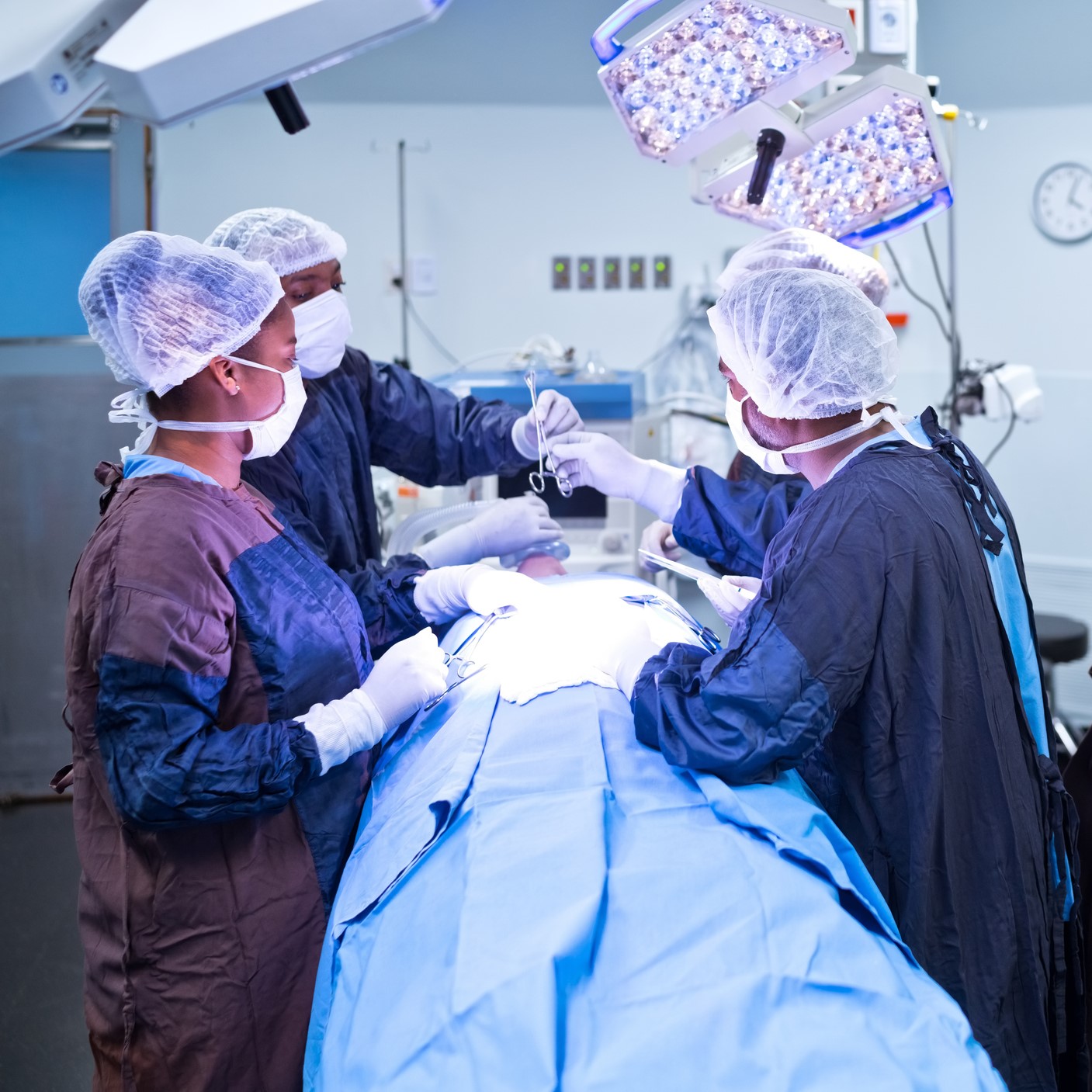
Situation: An experienced theatre nurse was working in a busy theatre suite that is often short staffed. When the nurse started on the afternoon shift, the theatre list was discussed.
Background: High operational demand led to a detailed clinical history not being provided about a patient who was known to have a blood borne virus. The nurse was called into the operating room and whilst in there, was splashed with blood as an instrument was passed to a colleague.
Assessment: The nurse was not aware of the patient’s diagnosis. When entering the operating theatre, the nurse did not wear protective eyewear as this was not available. Following the incident, the nurse followed the protocol for the management of blood and body fluid exposure. Though the nurse did not contract the blood borne virus, the staff member experienced psychological injury and raised a claim.
Recommendations:
We may not always know the infection risks from patients, but the appropriate PPE should always be available within clinical settings.
Where there is a risk of splashes from bodily fluids, eye projection must be worn (not just for patients where their status is known).
PPE should be readily available at point of use, and checking types and sizes are available should be part of a start of the day theatre checklist.
All staff should be trained in immediate first aid for bodily fluid splashes, and how to contact Occupational Health (OH) for follow up (or your local arrangements).
Managers should follow up straight away with staff to support and ensure that OH has been attended if appropriate.
Procedures should be straightforward and ensure staff are reviewed in a timely manner.
Systems must be in place for psychological support of staff following incidents.
Situation: A paramedic spent extended periods at the ambulance station (similar to a garage environment) and inside the ambulance vehicle during her shifts while waiting to transfer patients to emergency services. Due to operational demand, the ambulance was overdue in its repair, resulting in delays in identifying emissions of exhaust fumes.
Background: Despite smelling exhaust fumes, the paramedic continued with their duties as operational demand was high. Over time, they started experiencing symptoms such as nausea, headaches, fatigue, and occasional chest discomfort. They presented at the Emergency Department. The prolonged exposure further raised concerns about the increased risk of developing lung cancer.
Assessment: The organisation had failed to prevent the exposure of the claimant to substances which were hazardous to her health and failed adequately to control such exposure. The organisation failed to ensure that substances were contained and/or properly extracted. There was a failure to adequately monitor exposure, and a failure to ensure the adequate maintenance of ambulances. As such, there were failures to ensure a safe system and place of work. The claimant experienced sickness, injury to internal organs and subsequently psychological injury. Incidentally there was no local guidance in place for harm associated with running a vehicle while stationary.
Recommendations:
Follow internal processes to raise any concerns regarding fumes within your organisation.
Consider decommissioning older vehicles which may have poor emission levels.
Ensure vehicles are properly maintained, consider pre-use checks of vehicles by drivers and, if issues are found, remove from use until repaired. Keep records of maintenance regimes and monitor trends in faults.
Ensure vehicles are switched off when stationary. Where it is necessary to keep the engine running ensure there is sufficient ventilation.
Ensure staff are aware of actions to take when responding to and reporting faults.
Situation: A staff member was working as an administrator within a clinical setting on a ward, in a small office that was poorly ventilated. The hospital was undergoing maintenance works, occurring in the courtyard below the office. During the works, large amounts of dust particles travelled through the ventilation into the room making it difficult to breathe.
Background: Managerial staff were advised of the disruptions and persistence of dust within the office and communal spaces. When the staff spoke to managerial staff, they were advised that there were no alternative places to decamp to complete these duties. They were provided with a small fan to assist with ventilation, but staff found the fan increased dust circulation. Due to the clinical setting the office door could not be held open. The staff member felt obliged to complete their work despite these conditions.
Assessment: There were poor ventilation systems, and despite the provision of the fan, the dust persisted. The organisation failed to make suitable and sufficient assessment of the risks created by the work in question to the health of the staff member. There was a failure to prevent the exposure of the claimant to substances which were hazardous to their health. They further failed to ensure that dust suppression measures were put in place to ensure that the dust levels were kept to a minimum or staff were moved to areas where they would not be exposed to dust at levels which may cause irritation. The staff member experienced exacerbation of an existing respiratory condition.
Recommendations:
Review causes of dust and what can be done to eliminate or reduce this (building works, extract ducts etc.) by ensuring dust suppression is in place.
Ensure any engineering works carefully consider how risk from environmental dust is controlled and mitigated at the onset of project.
Review the frequency of cleaning to keep dust levels under control, and ensure the cleaning equipment is working properly.
Installation of filtered air intake/extract may help reduce the levels if levels still remain high.
Remove staff from the area until dust levels have been reduced. Where possible, consider hybrid working, hot desking etc.
Monitoring of dust levels to ensure that they are controlled to low levels.
PPE would rarely be a suitable control for office workers. However, a mask may be considered for short term work that needs to be carried out in areas where there is dust or where dust is generated (though if you can, local exhaust ventilation (LEV) to remove the dust should be considered).
Understand the risks involved in your role such as mixing chemicals.
Don’t use ill-fitting PPE and make sure you are in a suitable environment with adequate ventilation while using any chemicals.
Ensure you are aware of your internal safety policies and procedures, and escalate any concerns to your manager in writing to ensure they are documented.
3 The ‘other chemicals’ descriptor has been used where no specific type of chemical has been named. Claims under this descriptor identified injury sustained by chemical burn, injury affecting the sense, or injury to internal organs.
4 Vehicle fume has been included within ‘dust and fumes’ as a sub-theme as these claims were associated most commonly with vehicle related fumes and carbon monoxide.
Abigail FogartyRMN Associate Safety and Learning Lead, NHS Resolution
Justine SharpeRD Safety and Learning Lead, NHS Resolution and Patient Safety Specialist, Dietician
Matt Hall CMIOSH Associate Director of Health, Safety and Working Environment Imperial College Healthcare NHS Trust
Dipak Chauhan, CMIOSH, C.ErgHF, MIEHF Head of Trust Health and Safety Health and Safety Department, Corporate Division Barking, Havering and Redbridge University Hospitals NHS Trust
Joe Donnelly National Officer (Health and Safety) Unison

 Situation: A member of cleaning staff works across multiple wards within a busy trust. They had previously worked within an agency, but more recently was recruited to work full time within an NHS trust.
 Situation: An experienced theatre nurse was working in a busy theatre suite that is often short staffed. When the nurse started on the afternoon shift, the theatre list was discussed.
 Situation: A paramedic spent extended periods at the ambulance station (similar to a garage environment) and inside the ambulance vehicle during her shifts while waiting to transfer patients to emergency services. Due to operational demand, the ambulance was overdue in its repair, resulting in delays in identifying emissions of exhaust fumes.
 Situation: A staff member was working as an administrator within a clinical setting on a ward, in a small office that was poorly ventilated. The hospital was undergoing maintenance works, occurring in the courtyard below the office. During the works, large amounts of dust particles travelled through the ventilation into the room making it difficult to breathe.