
Demographics, professions and concerns: Analysis of Practitioner Performance Advice cases including a focus on sexual misconduct concerns
NHS Resolution’s Practitioner Performance Advice service (Advice) delivers a range of services to frontline healthcare organisations on the management and resolution of concerns about doctors, dentists or pharmacists. In all cases, our support is directed towards helping to ensure that concerns are handled fairly and proportionately, and to aid the NHS clinical workforce to deliver safe and effective care for patients.
We are pleased to publish our annual analysis of the patterns of concerns reported to us by healthcare organisations, as well as the demographics of the practitioners who are the subject of our cases, over a five-year period between April 2020 and March 2025.
This year we are providing separate, additional analysis focusing on requests for Advice involving concerns of sexual misconduct over the past 10 years. This will contribute to the work progressing across the NHS to tackle unwanted, inappropriate and/or harmful sexual behaviour in the workplace, in line with the sexual safety charter.
Unless otherwise stated, the analysis includes cases across all the jurisdictions we operate in which are England, Wales, Northern Ireland, Guernsey, Jersey, and the Isle of Man.
There is no threshold for contacting Advice, nor any restriction to contacting Advice in only those cases where formal procedures are invoked.
Key headlines
- Over the past 10 years there has been an increase in cases where the reported concern relates to sexual misconduct, both in the number of cases we receive and in the proportion of our casework. Examples of concerns of sexual misconduct in cases included sexual comments, inappropriate touching as well as more serious allegations including rape.
- Analysis across all concern types show that behaviour/misconduct features in 76% of the cases over a five-year period, showing a small year on year increase and accounting for 81% of cases in 2024/25.
- Separate analysis of practitioners by individual demographic groups shows that ethnic minority, international medical graduates (IMGs), older and male practitioner groups are overrepresented across cases discussed with us by employers and contracting bodies.
- NHS Resolution is committed to supporting the fair management and resolution of concerns by working with healthcare organisations through our range of services and our tool for handling performance concerns locally, the Principles and Framework for Fairness and Proportionality.
Key actions for managers dealing with performance concerns
- We invite you to consider the findings and how your experience of managing concerns at your organisation compares to the national picture.
- We ask you to consider using NHS Resolution’s Advice service to provide impartial advice as early as possible when a concern arises. We are available to support you on the fair and effective application of your organisation’s own local performance management procedures and good practice in relation to case management and investigation.
- If you are responsible for the management/oversight of concerns about individual practitioners, consider using the Principles and Framework for Fairness and Proportionality and explore how it may be adapted for use at your organisation.
- Request your own Organisational Activity Report (OAR) to support the fair and effective resolution of concerns. The OAR can help to identify patterns and issues in casework, providing insights to strengthen local performance management and improve frontline understanding of the causes of concerns. You can discuss your report with your Link Adviser who will provide an independent view on your report, making use of their experience and expertise in performance management.
- Consider if your organisation needs more support from Advice in the management of cases where there is a concern about sexual misconduct.
Professional groups
Between April 2020 and March 2025, our cases involved 4,064 practitioners with the majority about doctors, followed by dentists then pharmacists. These figures are an increase from 3,645 practitioners reported in the five-year period April 2019 to March 2024, noting the overlap in reporting periods, reflecting an increase in demand across our Advice services.
Professions of practitioners
Practitioners in cases between April 2020 – March 2025
Doctors: 3,839 (94.5%)

Dentists: 203 (5.0%)

Pharmacists: 8 (0.2%)

There were also 14 other types of practitioner we were contacted about. Please note that the total number of practitioners differs from the total number of cases, as some practitioners may be subject to more than one case.
Practitioner demographics
We conducted an analysis of the personal characteristics of the practitioners in our cases against the NHS workforce of GPs, secondary care doctors and dentists in England and the General Medical Council (GMC) Medical Register data with the aim of understanding if any groups are overrepresented and, if so, to what extent.
Rate of cases per 1,000 practitioners over 5 years for England
Practitioners in cases between April 2020 – March 2025

Ethnicity
1.2x rate per 1,000
Practitioners from ethnic minority groups have a higher rate of cases compared to white practitioners

Gender
3.0x rate per 1,000
Male practitioners have three times the rate of cases compared to female practitioners

Place of qualification
1.7x rate per 1,000
Doctors who qualified outside the UK and EEA have a higher rate of cases than UK qualified practitioners

Age
7.1x rate per 1,000
Practitioners 65 and over have more than seven times the rate of cases for their age group compared to those under 35
Ethnicity, gender and age figures are for doctors and dentists in England. There is no equivalent data for Wales and Northern Ireland to reproduce this analysis with these countries. Place of qualification is for doctors in England only.
Age and gender
We observed a higher case rate for male compared with female practitioners, with male practitioners three times more likely to have a case with Advice.
In terms of age, the rate of cases for practitioners increased with each advancing age group. Practitioners who were aged 65 and over had 7.1 times the rate of cases for their age group per 1,000 than those aged under 35 years. It is worth noting that in terms of the volume of cases, we receive relatively few cases for the over 65 and under 35 age groups.
These findings are echoed in our analysis of exclusions which find that male doctors and dentists and those aged 65 and over are statistically more likely to be excluded1.
Ethnicity and place of qualification
Practitioners from ethnic minority groups had 1.2 times the rate of cases per 1,000 practitioners compared with white practitioners. Practitioners who qualified outside the UK had 1.7 times the rate of cases per 1,000 practitioners compared to those that qualified in the UK which has not changed substantially from our previous analysis.
We recognise that ethnic minority and IMG practitioners are disproportionately impacted by formal disciplinary processes as discussed in Fair to Refer published by the GMC2 and other work from the NHS3. Analysis of Advice cases has found that groups of doctors and dentists who are statistically more likely to be excluded are male, aged 65 and over or from Asian or Asian British, Black or Black British or Mixed ethnic groups4. Please also see our publication on the lived experience of ethnic minority and IMG practitioners who had cases with our service5.
Our recently published Principles and Framework for Fairness and Proportionality has been developed to promote fairness, proportionality and consistency in decision making when managing and resolving performance concerns for all practitioners. It is arranged around the following five key principles:
- Ensuring welfare and support
- Understanding the issues
- Ensuring the practitioner is heard
- Adherence to process
- Equity and proportionality
Pattern of concerns
Concerns in cases between April 2020 – March 2025
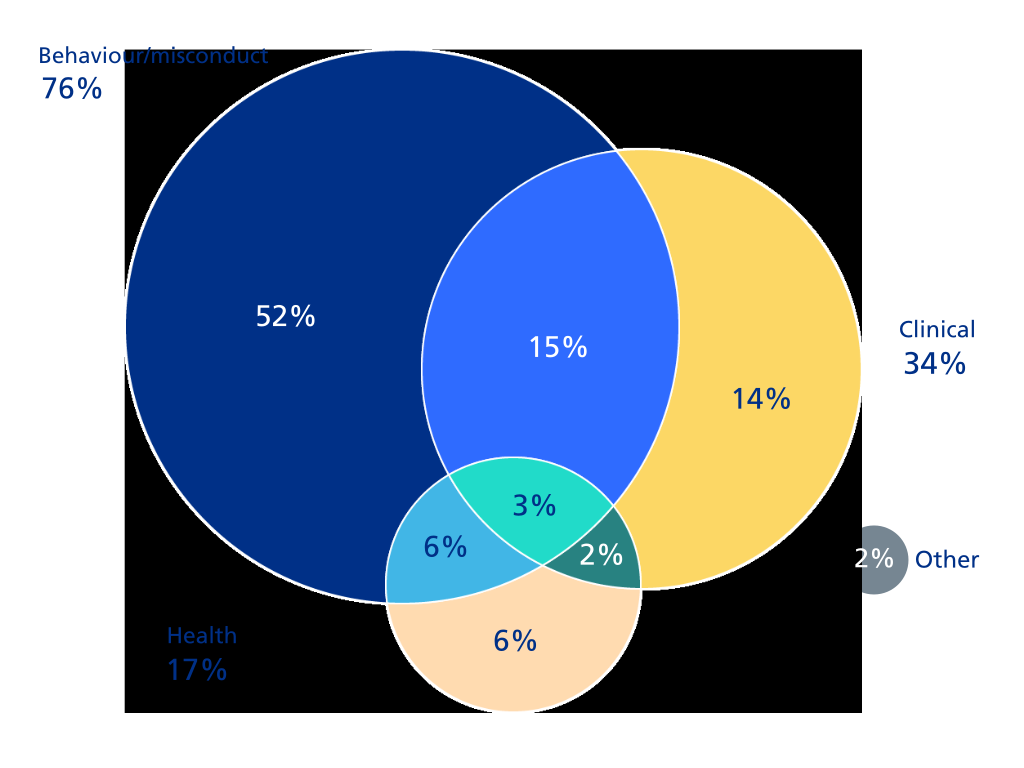
Analysis reflects 4,323 cases. Due to rounding the total percentages in the diagram sum to 99%. Some cases involve multiple concern types, leading to total percentages between the categories of behaviour/misconduct, clinical and health concerns exceeding 100% because, for example, in this dataset 15% have both a clinical and behaviour/misconduct concern. Cases with no reported concern type have been excluded from this analysis.
76% of cases involved a behavioural/misconduct concern, the spectrum of which includes poor communication with colleagues, issues with teamwork and breaches of confidentiality, to incidents of theft or fraud.
This reflects a year on year increase with 75% of cases in 2023/24 and 81% of cases in 2024/25 involving a behavioural concern. Noting that a recent change to concern classification in our case management system may partially account for the increase6, we have nevertheless observed an increase since analysis of cases from 2007–2013 showed 58% involved a behavioural concern.
In 2025/26 we will further develop our assessment and intervention services to facilitate opportunities for reflective practice and behaviour change.
You may find the resources below useful in gaining a better understanding of the behavioural concerns we see in our cases and how we can support their resolution:
- Our behavioural assessments provide an independent view on the behavioural characteristics of the practitioner, including any areas which require consideration, as well as providing information to assist the referring organisation in decisions about the next steps in their management of the case.
- Our analysis of 141 of behavioural assessments of doctors which found an overarching theme of a lack of self-awareness and insight. For example, doctors described developing themselves, but this tended to focus on clinical and technical skills and knowledge, and not personal growth and interpersonal skills.
- Our Insight, Specialties in Practitioner Performance Advice cases: Key themes, case studies and use of our services, analyses the concerns in our cases involving secondary care specialties and provides case studies that relate to behavioural, clinical, health and team working concerns, providing useful insights for managing concerns in any sector.
Concerns of sexual misconduct in Advice cases
Following the launch of the sexual safety charter in September 2023 (NHS England), all NHS provider trusts and all integrated care boards in England have committed to ten principles including:
- Principle 1
- We will actively work to eradicate sexual harassment and abuse in the workplace.
- Principle 2
- We will promote a culture that fosters openness and transparency, and does not tolerate unwanted, harmful and/or inappropriate sexual behaviours.
The NHS staff survey results published in 2024 found 1 in 26 staff reported being the target of at least one incident of unwanted behaviour of a sexual nature in the workplace in the last 12 months7, as well as other surveys reporting that sexual harassment of NHS staff is widespread8. This builds on previous academic work on sexual harassment, assault and rape by colleagues in the surgical workforce9 and the ongoing collection of stories of sexism, sexual harassment and sexual assault in healthcare by Surviving in Scrubs.
Increasing cases involving a concern about sexual misconduct
We undertook analysis with keyword matches10 to identify cases where there was a concern relating to sexual misconduct over a 10-year period11.
The analysis covering the past 10 years showed an increase in cases since 2019/20 which were matched to the keywords as involving a concern about sexual misconduct in two ways:
- The number of cases matched as involving sexual misconduct has increased as an absolute number of cases from just under 150 per year to just under 250 cases per year.
- The proportion of matched cases also shows an increase from approximately 14% of cases involving a concern about sexual misconduct ten years ago, up to 20% in 2024/25, an absolute increase of 6% and relative increase of 43%.
The increase in cases may represent an increase in occurrence, greater awareness of sexual misconduct as an issue, a rise in individuals coming forward to report concerns about sexual safety, an increase in organisations seeking advice from our service, or a combination of these factors. It is worth considering that the most recent increase in cases in 2024/25 could be as a result of changes in organisational approaches following the launch of the Sexual Safety Charter in 2023, legislative changes12 and proactive work by NHS organisations in response to publications such as Breaking the Silence – Addressing Sexual Misconduct in Healthcare and the General Medical Council’s refreshed Good Medical Practice, which outlines the behaviours that constitute sexual misconduct.
Increase in Advice cases where the concern relates to sexual misconduct
The percentage of cases identified through keyword matches are the proportion of Advice cases that year and this varies year on year.
Themes in Advice cases
The graph below outlines the number of Advice cases where keywords appeared by theme. A case can have multiple keywords associated with it and these have been grouped to show six themes. The most frequent theme in cases related to concerns about sexual offences, assault, harassment and violence which may relate to concerns which are criminal acts, followed by concerns about other sexual behaviour which are inappropriate in a professional setting such as sexual advances and flirting.
Number of cases mentioning keywords per theme
Duration of cases
Cases identified as involving a sexual misconduct concern appear to have a longer duration as measured both by the median months open (2 months longer) and mean months open (5.2 months longer). This may indicate an increased level of complexity in cases where there is a concern around sexual misconduct and particularly if other bodies are involved such as the police and/or professional regulators.
| Type of case | Median months open | Mean months open |
| Case identified as sexual misconduct concern | 7.0 | 13.0 |
| Other types of case | 5.0 | 7.8 |
Actions for Advice to support the management of concerns about sexual misconduct
The advice and education we offer to healthcare organisations recognises that managing and investigating concerns about sexual misconduct is complex with additional considerations needed. This includes; how to support witnesses and the practitioner, careful interviewing practice, as well as managing external involvement from other agencies such as the police to ensure the process is fair, robust and does not further exacerbate harm.
To further support learning for employers across the healthcare system, we are working on the following actions:
- This is the first analysis of our casework focusing on sexual misconduct and we will use this as a platform to understand and analyse the information we hold further.
- In response to the increase of cases concerning sexual misconduct, as well as the apparent longer duration in the management of these cases, Advice’s Education service has changed the focus of the central fictional educational case study in the Case Investigator Secondary Care training programme. Case Investigator Secondary Care is an interactive course focussed on the development of key skills and knowledge required by case investigators. We will also be running a sexual misconduct learning event for those involved in the management of performance concerns later in the year, to share our learning and insights more widely. Please look out for further information about this opportunity on the Practitioner Performance Advice webpages and our Education training courses.
What should healthcare organisations do next?
We invite healthcare organisations to consider these findings and how you engage with Advice with regards to the following:
- Review and consider the key actions for managers dealing with performance concerns at the start of this paper, including contacting the Advice service for support, adopting the Principles and Framework for Fairness and Proportionality and requesting your own Organisational Activity Report.
- Consider if you contact Advice early enough for all cases, including those involving behavioral concerns. Earlier involvement of Advice could lead to earlier resolution. There is no threshold for contacting Advice, nor any restriction to contacting Advice in only those cases where formal procedures are invoked. For more information on formal and informal case management, please see our Expert View Insight from Sally Pearson, our Responsible Officer and HPAN Lead and interim Head of Case Advice at NHS Resolution.
Our Insight publications share analysis and research which draw on our in-depth experience providing expert, impartial advice and interventions to healthcare organisations. By sharing these insights, we aim to support the healthcare system to better understand, manage and resolve concerns about doctors, dentists or pharmacists. You can find all past reports here.
If you are interested in hearing more about our research and insights programme, please get in touch with us at nhsr.adviceresearchandevaluation@nhs.net or sign up to receive Insights by email.
If you’d like to learn more about our work and the services we offer, please visit our dedicated Practitioner Performance Advice webpages. Our Education service offers training courses to provide healthcare organisations with the knowledge and skills to identify and manage performance concerns locally.
Footnotes
1 Trends from Practitioner Performance Advice’s support of the management of exclusions in England (Practitioner Performance Advice, 2025)
2 Fair to Refer? (GMC, 2019)
3 Medical Workforce Race Equality Standard (MWRES) WRES indicators for the medical workforce 2020 (NHS England/Improvement, 2021)
4 Trends from Practitioner Performance Advice’s support of the management of exclusions in England (Practitioner Performance Advice, 2025)
5 Experiences of ethnic minority and IMG practitioners: Research to improve fairness in the management of concerns (Practitioner Performance Advice, 2024)
6 Prior to 2024/25, our case management system had a category to record concerns as ‘other’. Since 2024/25 we no longer use the category ‘other’.
7 Sexual safety in the NHS: survey results and update on charter implementation (NHS England, April 2024)
8 Sexual harassment of NHS staff widespread – Unison survey (BBC News, April 2024)
9 Sexual harassment, sexual assault and rape by colleagues in the surgical workforce, and how women and men are living different realities: observational study using NHS population-derived weights (British Journal of Surgery, 2023)
10 We acknowledge that the proportion of cases identified by matching key words does not perfectly represent the true number/proportion of sexual misconduct cases.
11 The analysis covered the financial years 2015/16 to 2024/25, but only covered cases up to 15/03/2025 in the final year of the analysis. The approach to identify sexual misconduct cases had an accuracy of 89% against cases already marked as sexual misconduct cases on our case management system for cases where sexual misconduct was identified as a concern when the case was opened. The manual review by SMEs of cases identified as involving sexual misconduct through keyword matched produced an accuracy of 89%. Our Data Science Team has indicated that there is consistent recall across the timeframe of analysis which indicates an upward trend of cases and that the 6% increase can be considered with a reasonable degree of confidence.
12 New protections from sexual harassment come into force (Office for Equality and Opportunity, October 2024)
Published: