
Introduction
Our strategy at a glance
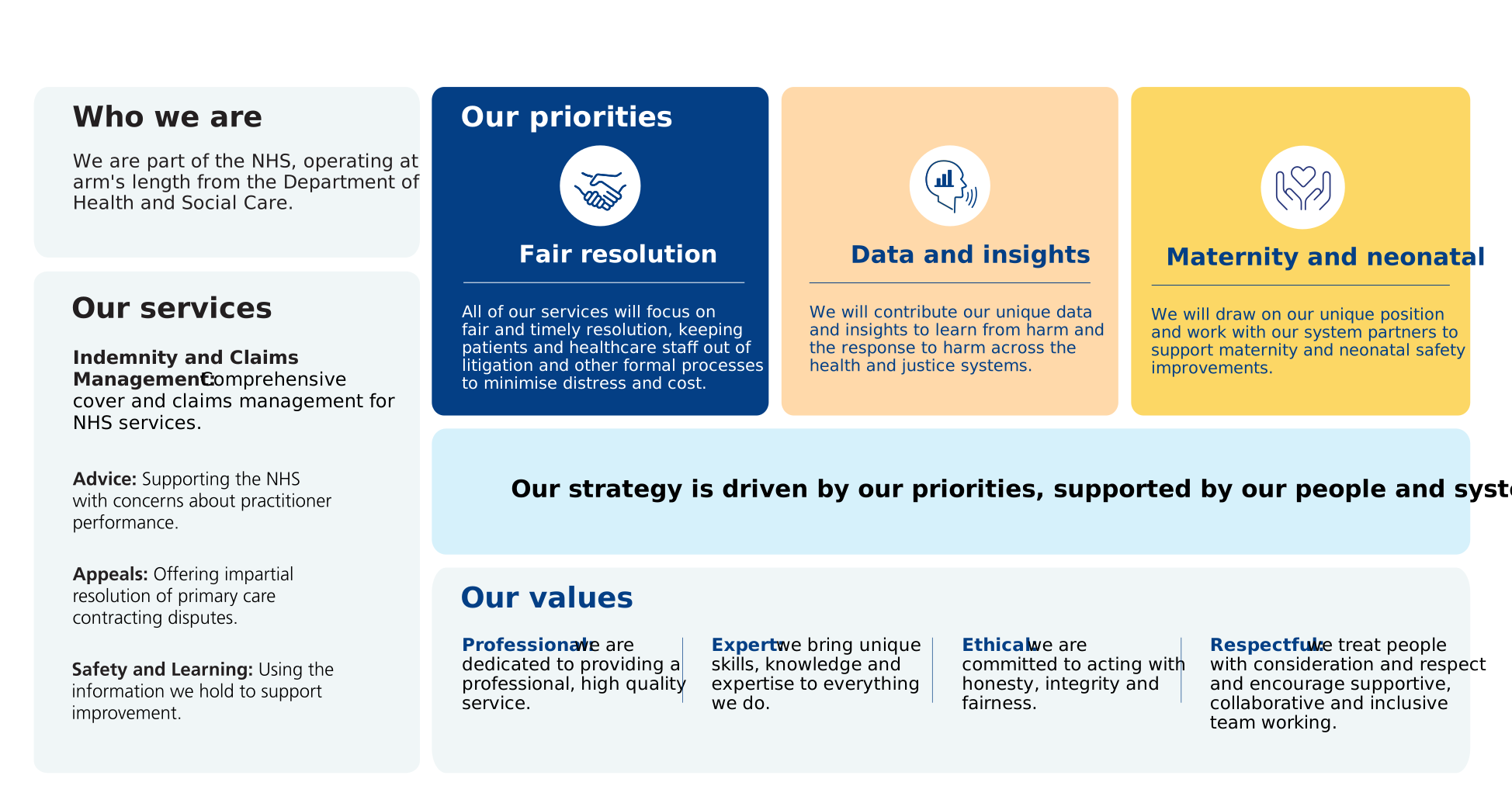
Our strategy at a glance sets out our strategic direction for 2025–2028. It brings together our priorities, and the areas we will focus on to guide our work over the next three years.
Welcome from our Chair and Chief Executive
Welcome to our 2025/26 business plan. This discusses in detail our financial and delivery plans for the first year of our three-year strategy – Resolution through collaboration.
The challenges faced by the health service are serious, with the costs of clinical negligence currently amounting to £5.1 billion annually1 against a background of constrained public finances. NHS Resolution has delivered reliable and comprehensive indemnity solutions for the NHS for 30 years, offering the best value for public funds and supporting open, compassionate care in which litigation (where required) is not seen as a barrier to transparency.
Over the next three years, we will continue to focus on supporting trusts to deliver safe, personalised and compassionate patient care with a specific focus on our work in maternity and neonatal care, recognising it remains an important area of concern for the NHS.
Our focus will remain on ensuring fair and timely resolution, keeping patients and healthcare staff out of litigation and other formal processes to minimise distress and cost. In addition, we will continue to provide expert advice and support on the management of concerns about the performance of doctors, dentists and pharmacists, whilst also continuing to fairly and promptly resolve appeals and disputes between primary care contractors and commissioners.
This year we will continue to embed our Claims Evolution Programme and deliver its benefits, using our expert workforce more effectively to ensure efficiency and effectiveness. We will also enter the final stages of implementing our new case management system, CaseHub. CaseHub moves us to a state-of-the-art technology platform for the future, making it easier for our members to interact with NHS Resolution whilst increasing our analytical capability and enable us to learn more from the cases we handle.
We will share our insights with frontline clinicians, legal teams and trust boards to learn from and improve the system-wide response to harm whilst ensuring that options for patients are clearly explained and that we continuously improve the impact of our products and services.
We will draw upon our unique position and work with our system partners to support maternity and neonatal safety improvements. This year, we will see the conclusion of the evaluations of our Maternity Incentive Scheme (MIS) and Early Notification (EN) scheme. Findings from both evaluations will support our continued efforts to contribute to improved maternity and neonatal care
Underpinning our in-year work plan is a commitment to our people-centred activity, in addition to identifying where we can be as effective and efficient as possible in delivering our core services. As part of this work, we will explore options to use artificial intelligence (AI) and other digital tools for improved data analysis.
We are grateful to our NHS partners, our sponsoring department and to our own staff for their continued commitment and hard work to ensure we deliver all that we set out to achieve in our ambitious annual plan.

1 The cost of harm represents the cost of claims resulting from incidents from a specific financial year. For further information please see 2023/24 Annual report and accounts (page 72).