
Resolution through collaboration: 2025–28 strategy

Publication date:

A summary of NHS Resolution's role as an organisation.

Who we are and what we do

We are part of the NHS, operating as an arm’s-length body of the Department of Health and Social Care (DHSC), tasked with:

  • Administering a range of indemnity schemes to cover the risks involved in delivering general practice and secondary healthcare services in England and handling associated compensation claims.
  • Providing expert advice and support on the management of concerns about the performance of doctors, dentists and pharmacists.
  • Resolving contracting disputes between primary care contractors and commissioners of primary care, operating independently and transparently.
  • Using our unique perspective across the causes of claims, performance concerns and contracting disputes to provide insights back to the NHS to help to improve safety and manage risk.

30 years of progress

The timeline below charts key moments and milestones from the past three decades.
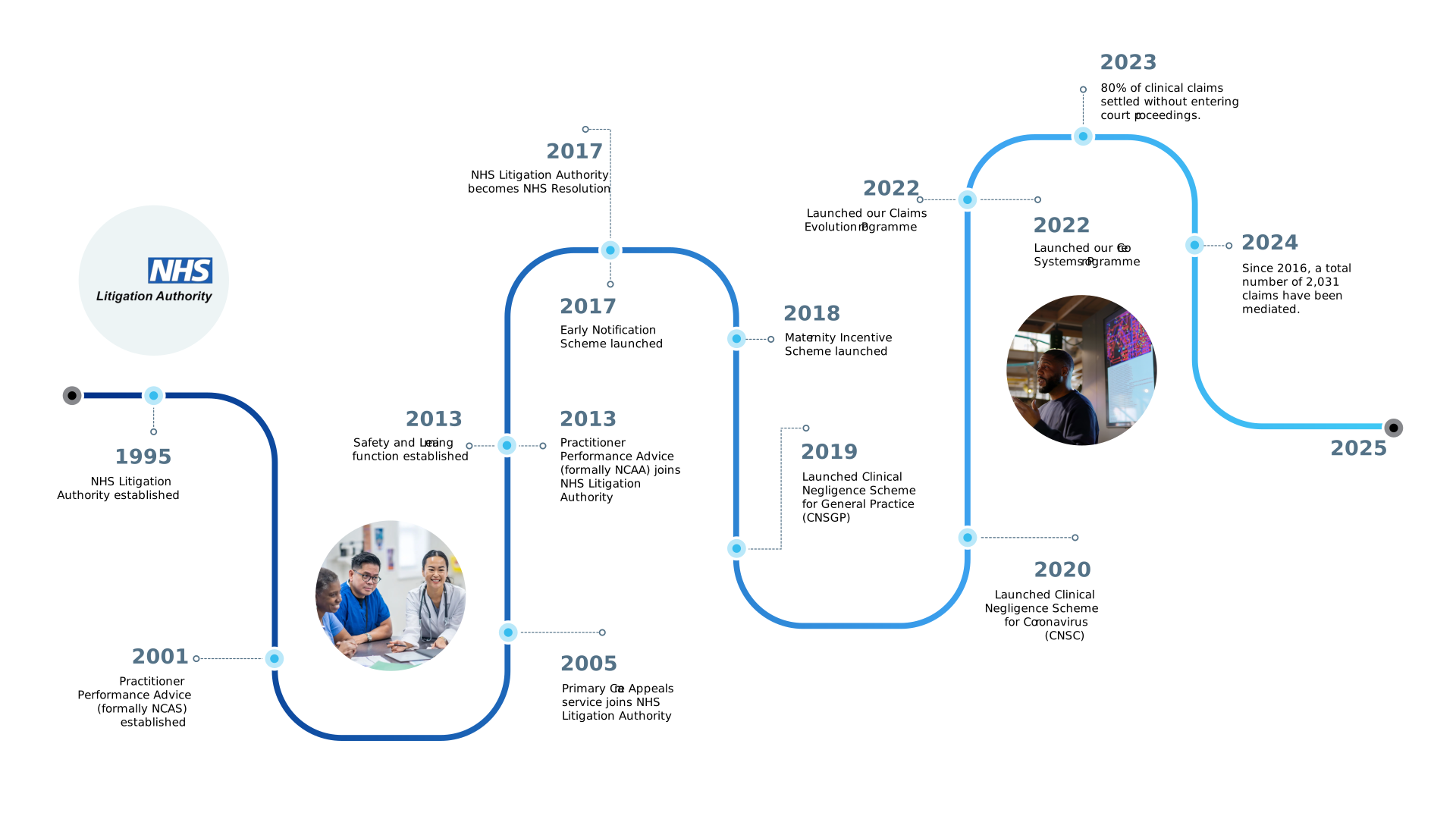
A timeline titled "30 Years of Progress" showcasing key milestones in NHS Resolution’s history from 1995 to 2025. Events include the establishment of the NHS Litigation Authority in 1995; the addition of the Primary Care Appeals service in 2005; the formation of Practitioner Performance Advice (formerly NCAS) in 2001, joining the Authority in 2013; and the creation of the Safety and Learning function in 2013. The Early Notification Scheme launched in 2017, and the NHS Litigation Authority rebranded to NHS Resolution that same year. The Maternity Incentive Scheme was introduced in 2018, followed by the Clinical Negligence Scheme for General Practice in 2019, and the Clinical Negligence Scheme for Coronavirus in 2020. In 2022, both the Claims Evolution and Core Systems programmes were launched. The timeline also highlights outcomes: in 2023, 80% of clinical claims were settled without court proceedings; and by 2024, 2,031 claims had been mediated since 2016. The timeline marks 30 years of progress by 2025.